ARION, generating power when everything wears
How a 14.32 m aluminium sailing yacht becomes a micro power plant capable of holding out for weeks far from any port, while powering life aboard and an embedded scientific station in the Southern Ocean.
A sailing yacht designed as a polar station
At high latitudes, electricity is not a comfort, it is a survival condition. Aboard ARION, it powers what keeps the boat moving, warm, connected and collecting scientific data, even when the sky is overcast, the panels are frozen over, and the idea of a refuge port has long since vanished.
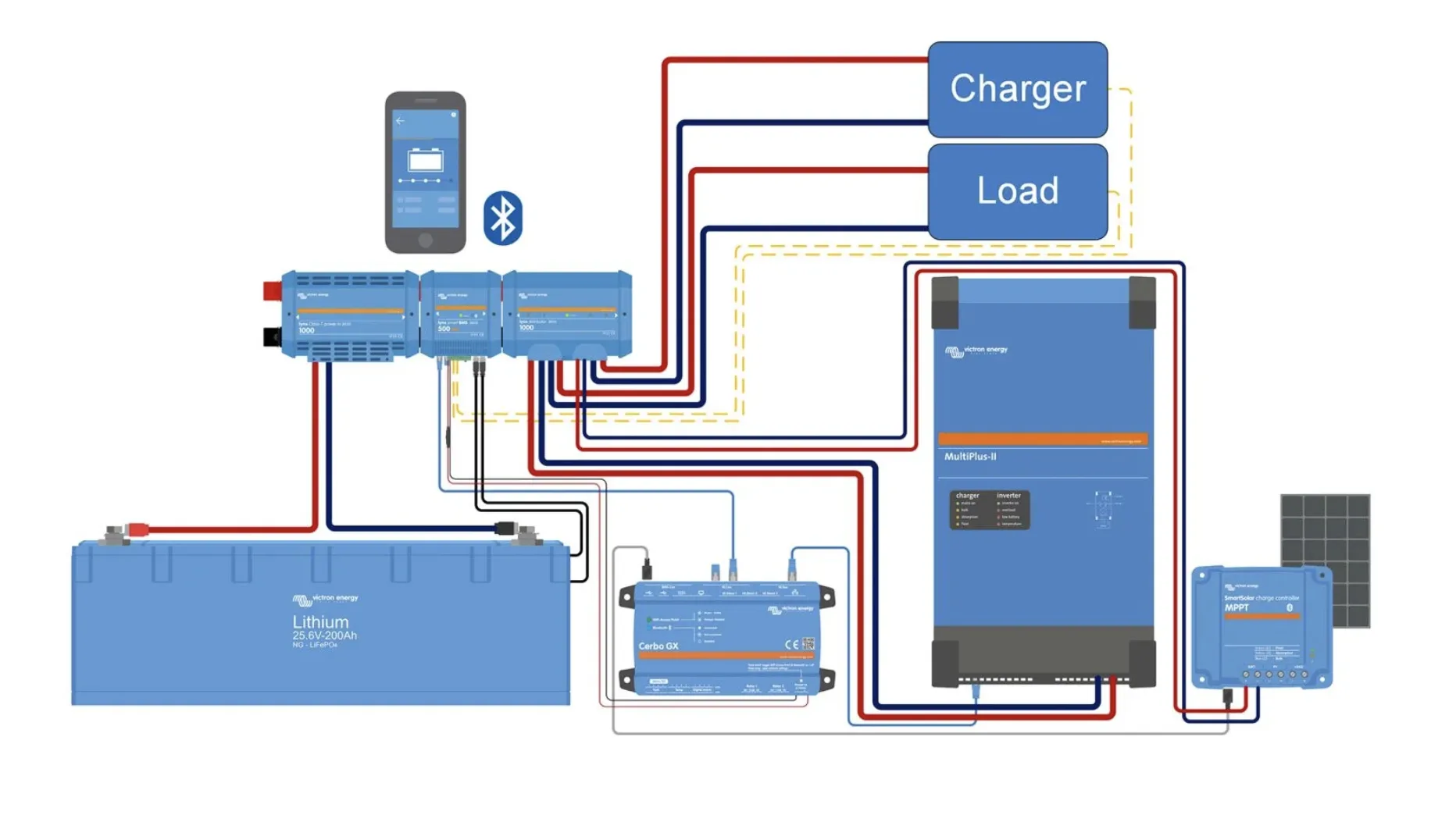
ARION's energy architecture rests on several complementary sources and two independent LiFePO₄ battery banks. The goal: stay manoeuvrable, heated, lit, autopiloted and connected, without depending on a shore power outlet.
Energy architecture
ARION operates as a simple hybrid power plant, easy to maintain in isolation. Energy is generated by a set of renewable sources, backed by the engine and an emergency generator, then distributed over a single 12 V network.
- Multiple sources: two wind turbines, ≈600 W of solar, engine alternator, diesel generator.
- Two large independent LiFePO₄ banks plus several dedicated auxiliary batteries.
- Single 12 V network to minimise converters and simplify repairs.
- Continuous monitoring of power flows and paper procedures to intervene even without screens.
The guiding principle: never depend on a single machine or a single battery bank, so the boat remains operational even after a major failure.
Generating power in fair weather… and especially in foul
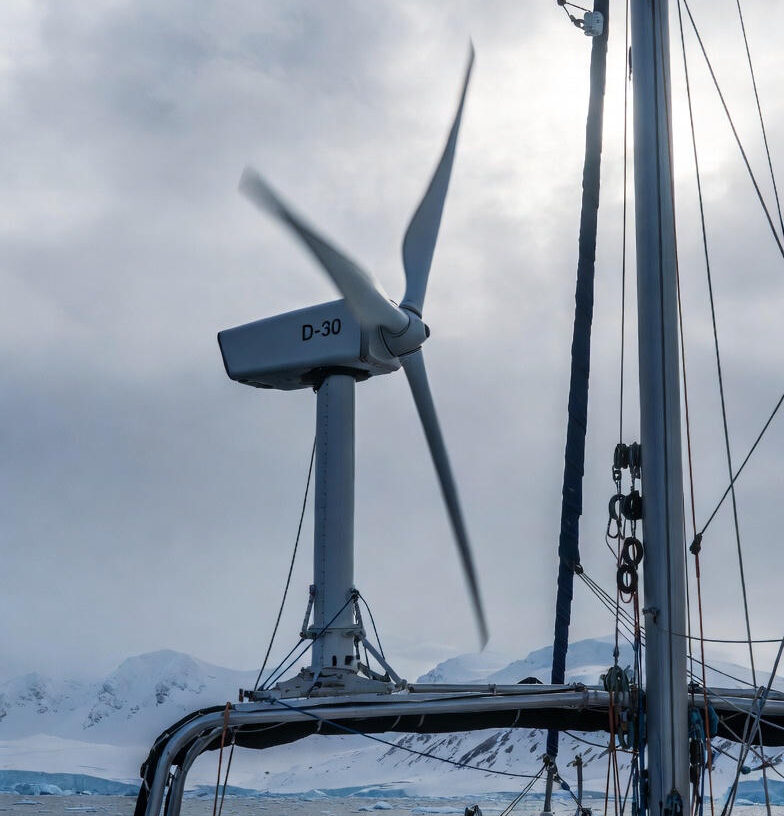
Between Patagonia, the Drake Passage and Antarctica, conditions change constantly. Energy cannot come from a single source: ARION combines two wind turbines, solar, engine alternator and emergency generator to stay autonomous over the long haul.
Wind turbines
Underway and at anchor, the two 500 W wind turbines provide the base load. Optimised for the strong winds of the Roaring Forties and Furious Fifties, they exploit precisely what makes the sailing demanding: the wind that never drops. They cover much of the draw from the autopilot, instruments and part of the scientific station.
Their output is the most regular of the renewable sources south of 60°S, where sunlight is scarce and the sea stays built for days on end.
- Two 500 W wind turbines: base load underway and at anchor.
- Steady output precisely when the wind builds, day and night.
- Charge maintained even when the sun disappears for several days.
Solar, alternator & generator
The solar array combines rigid panels on the stern arch with flexible panels spread across the coachroof and stern, to limit losses from rigging shadows and the low sun angles of southern latitudes. In favourable conditions, it covers much of the baseline consumption.
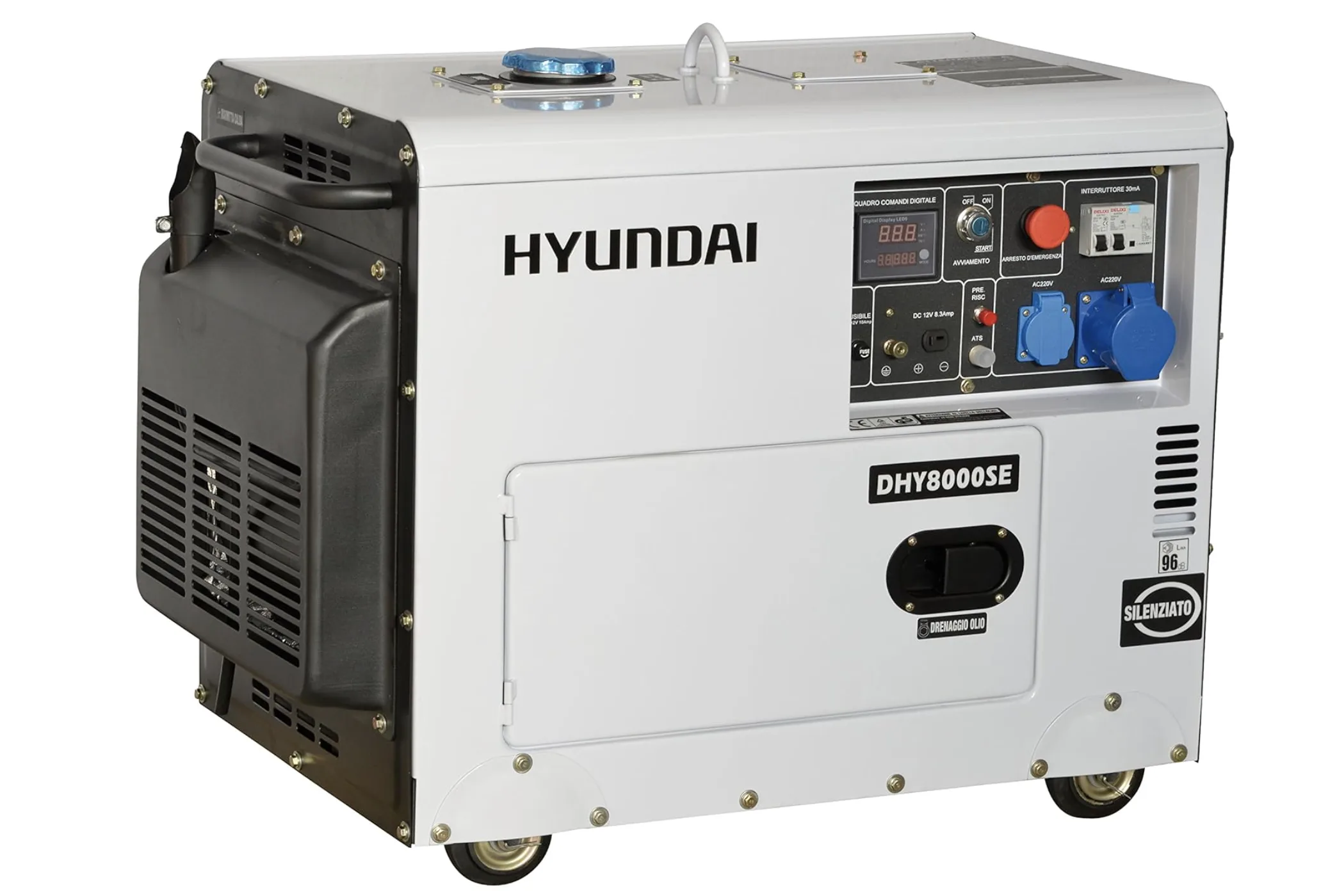
When the wind drops or after a long stretch of unfavourable weather, the main engine alternator allows rapid recharging of the banks. As a last resort, a 3 kW peak diesel generator provides a safety net for consumption spikes or a full recharge.
- ≈600 W of distributed solar (rigid + flexible panels).
- Engine alternator: fast recharge during motoring phases or tricky exits.
- 3 kW diesel generator: last resort to maintain charging capacity whatever the circumstances.
Two independent LiFePO₄ banks, plus multiple backup levels
Generating is one thing; storing and distributing without weakness is another. ARION carries several lithium iron phosphate battery banks, sized to handle deep cycles and low temperatures, plus dedicated batteries for certain critical uses.
Service bank & scientific station
The first LiFePO₄ bank is dedicated to life aboard and the scientific instruments: lighting, computers, sensors, pumps, minimal comfort. It is sized to handle repeated deep discharges, with several thousand possible cycles.
- Two high-capacity LiFePO₄ batteries for ship's services.
- Internal BMS designed for deep cycles and low temperatures.
- Continuous supply to the onboard scientific station.
Navigation bank & auxiliary batteries
A second LiFePO₄ bank is reserved for vital navigation systems: autopilot, instruments, radar, AIS and safety systems. If one bank fails, the other can be preserved to keep the boat manoeuvrable.
- Dedicated bank for vital systems: autopilot, radar, AIS, navigation electronics.
- Independent battery for the inboard engine starter.
- Separate batteries for the dinghy and outboard motor.
- One additional LiFePO₄ battery, pre-wired, ready to replace a failed bank.
The overall philosophy is simple: no single block can be unique. A bank can fail, the boat must stay upright.
A simple, robust and readable 12 V network
The entire vessel is wired at 12 V. This deliberate choice limits the number of converters, simplifies the schematics and eases repairs in the cold, with limited means. In polar regions, every element removed from the system is one fewer point of failure.
Monitoring, regulation & documentation
Energy management relies on MPPT regulators matched to the different solar arrays, dedicated regulators for the wind turbines, and a set of monitoring interfaces (Victron-type) that allow real-time tracking of production, consumption and bank charge levels.
- Single 12 V network, intentionally simple schematics.
- Dedicated regulation for each major production source.
- Centralised monitoring: voltage, current, cumulative flows.
- Data logging for feedback on embedded micro-grid performance.
- Paper diagrams, switchover procedures and troubleshooting checklists to intervene even without electronics.
This energy architecture is not a theoretical exercise: it is what allows ARION to live, sail, observe and measure where there is neither shore power nor a port of refuge. For more, the ARION page details the boat's design, its ice-contact philosophy and its character as a polar mount.